Our Products
Compressed Air Solutions
  • Screw Air Compressor
  • Oil Free Compressor
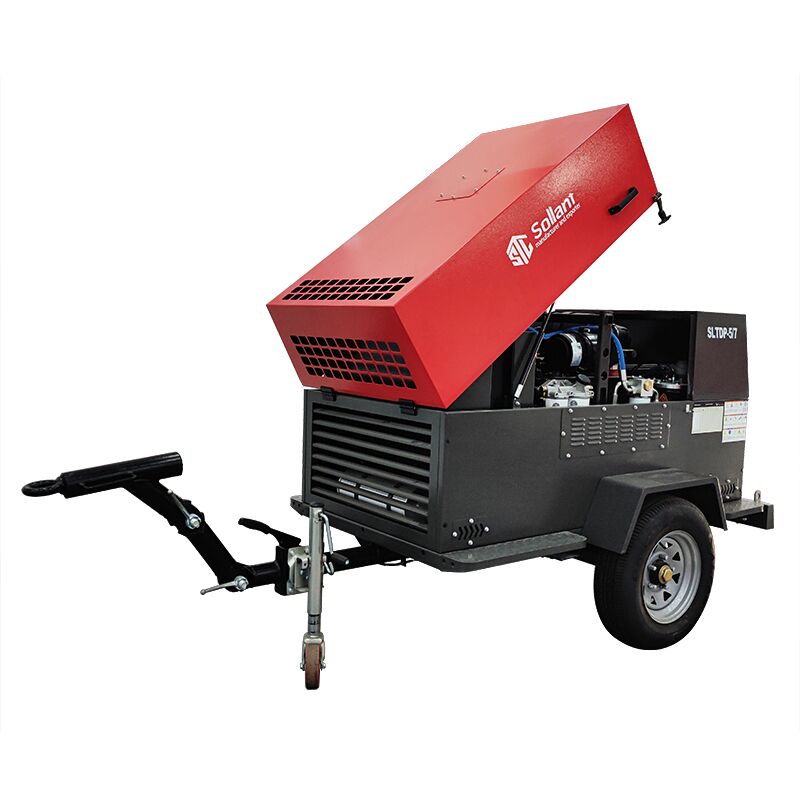
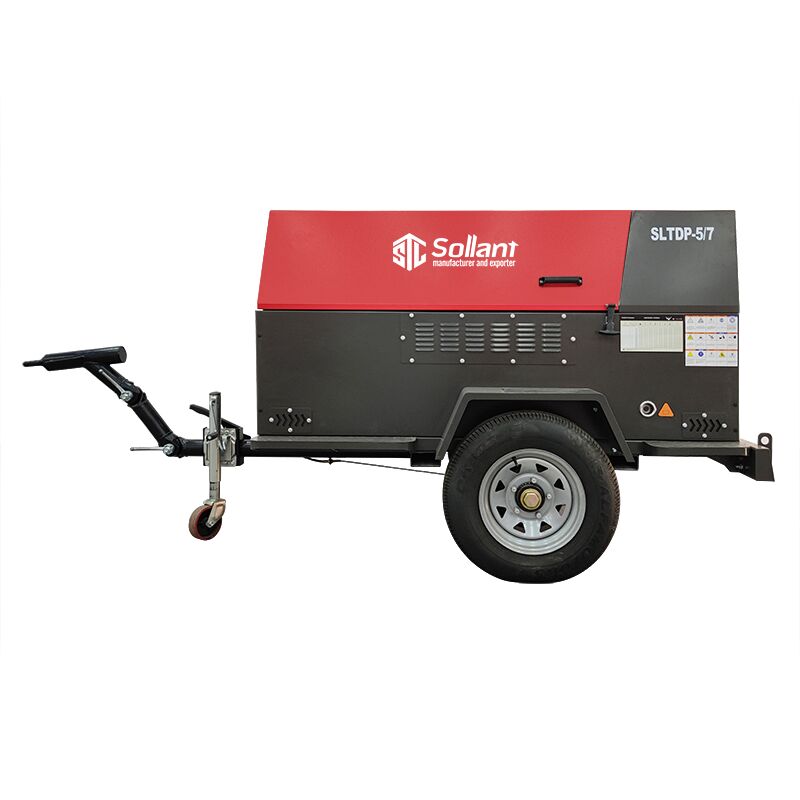
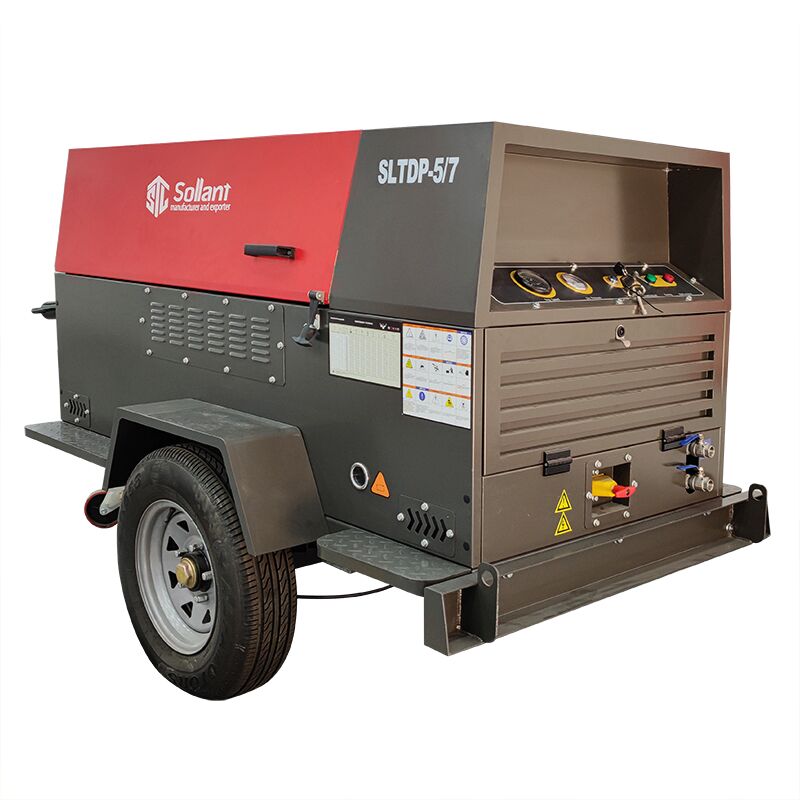
  • Diesel Portable Compressor
  • Gas Compressor
  • Specialty Compressor
  • Air Treatment
ISO 9001 Certified
24-Month Warranty
OEM & ODM Support
Factory Direct Price
All products→
VSD vs Fixed Speed Air Compressor
Equipment & Procurement

VSD vs Fixed Speed Air Compressor

Technical Article
30 min read
US Market

Unloaded Power Draw

Atlas Copco GA75 published ISO 1217 Annex C data: 18 kW unloaded. The sump holds about 3.5 bar residual pressure while the intake valve is shut and the airend keeps grinding against it for zero output.

Whether 18 kW of waste matters depends on one ratio from the audit log: loaded hours divided by total running hours. Stable three-shift production keeps the machine loaded 90%+. Batch work with idle gaps between programs might unload 40% of running hours. The machine is the same. The demand profile makes the financial outcome.

VSD vs fixed-speed is one cut of the four-method picture.

///

VSD at Full Speed

GA75 VSD+ at max RPM: 77 kW for the same output a standard GA75 delivers at 75 kW. Both from Atlas Copco's published data. Inverter switching losses and drive cooling account for the gap. A VSD spending most of its hours near full speed costs more to run than the fixed speed version. The error is in sizing, not in the technology. Kaeser's SFC selection software flags this and steers toward the fixed speed CSD when the load profile is flat. Move on.

///

Why Lubricant Chemistry Determines VSD Compressor Lifespan in Most of the World

This is the part of the VSD vs fixed speed comparison that should dominate the purchasing decision in any climate where ambient temperature exceeds 25°C and relative humidity exceeds 60% for a meaningful part of the year. That covers Southeast Asia, the Persian Gulf coast, coastal China, Central America, the southern United States, most of Brazil, West Africa, and large parts of the Mediterranean. It covers most of the world's industrial compressed air installations.

Oil injection in a flooded screw compressor depends on the pressure differential across a metering orifice between the discharge manifold and the injection point. When a VSD reduces speed, discharge pressure drops because the controller targets lower output. The differential across the injection orifice shrinks. Oil flow decreases. Rotor tip clearance on a new Kaeser sigma profile airend runs about 60 microns. Oil fills this gap and prevents backward leakage. When flow drops, the sealing film thins, leakage increases as a fraction of swept volume, and specific energy degrades faster than RPM decreases.

Full-speed discharge on a properly loaded 75 kW screw compressor sits between 80°C and 90°C. Water vapor passes through as vapor because 85°C is well above the dewpoint of the compressed mixture at sump pressure. When VSD speed drops to 25%, discharge temperature can fall below 60°C. In a climate with 28°C ambient and 80% relative humidity, the compressed air at sump pressure has a dewpoint above 60°C. Water condenses inside the compression chamber and enters the oil circuit.

This is where the lubricant choice forks the entire downstream outcome of VSD ownership.

Mineral oil and PAO, which together cover the vast majority of the global installed base outside of Kaeser machines, do not absorb water. Free water settles in the sump. The oil pump picks it up. It circulates through bearing journals. The ZDDP anti-wear additive package, standard in virtually every mineral and PAO compressor oil, hydrolyzes in the presence of free water. Hydrolysis products are sulfuric and phosphoric acid species. Total acid number on oil analysis climbs. Bearing race surfaces develop corrosion micro-pitting that looks completely different from mechanical fatigue spalling.

Sullair's service documentation for the S-energy VSD platform warns about this and recommends monitoring discharge temperature and shortening oil analysis intervals in humid environments. The advice is correct. It also assumes the operator reads the bulletin, orders sample kits, pulls samples on schedule, sends them to a lab, waits for results, and acts on them. On the plant floor at a midsize manufacturer with a two-person maintenance crew and a hundred other priorities, that monitoring chain breaks. Maybe the first two quarterly samples get pulled. By the third quarter somebody is on vacation and the sample gets skipped. By the time the next sample goes out the TAN has already moved well past the condemning limit and the damage to bearing surfaces has been accumulating for months.

Atlas Copco's Elektronikon controller on the GA VSD+ includes a software routine that detects low discharge temperature and temporarily overrides the demand-following algorithm to raise speed and bring the oil circuit above the condensation threshold. When the routine is enabled and running, it works. The problem is that the speed override causes a pressure transient in the plant header. In applications where a downstream process is pressure-sensitive, the site electrician or the commissioning engineer disables the routine to stop the transient. The controller allows this. There is no lockout preventing it. Once disabled, the compressor operates at low speed with discharge temperature in the mid-50s for as many hours as the demand profile dictates, with no alarm, because 55°C is not a fault condition. The display is green. The oil is turning acidic.

Kaeser did something structurally different. The SFC series runs on Sigma Fluid S460, a PAG formulation. PAG is hygroscopic. It pulls water into molecular solution rather than letting it pool as a free phase at the sump bottom. Dissolved water at 1,000 or even 1,500 ppm in PAG does not sit on bearing surfaces causing corrosion. Dissolved water does not hydrolyze ZDDP because Kaeser formulates Sigma Fluid S460 with a different additive chemistry that is not susceptible to the same hydrolysis pathway. The oil absorbs the moisture, keeps circulating, and the water eventually condenses out on the air side downstream of the separator and aftercooler, where it belongs. The oil circuit stays clean.

PAG foams if it contacts mineral oil residue. Converting a compressor from mineral to PAG requires thorough flushing. PAG costs more. Seal and hose materials need to be confirmed compatible. These are procurement and commissioning issues. They are not in the same category as a failure mode that silently destroys bearings over a twelve-month period.

The comparison between Kaeser's lubricant-chemistry approach and Atlas Copco's software-routine approach to the same problem captures something about the engineering philosophy of the two companies. Kaeser solved the condensation problem at the materials level. The PAG lubricant handles moisture intrinsically, with no dependence on controller settings, firmware versions, operator behavior, or oil sampling discipline. Atlas Copco solved it at the controls level, which works well when the controls are configured correctly and left alone, and fails when they are not. A firmware update can change default settings. A commissioning engineer can disable the routine. A plant electrician troubleshooting pressure transients has no reason to know that the temperature override exists for oil protection and may disable it without understanding the consequence.

The SFC's PAG-based approach is a passive, fail-safe solution. The GA VSD+ Elektronikon routine is an active, fail-possible solution. For any installation where the compressor will spend significant hours at minimum speed in a climate with moderate to high humidity, this distinction alone should tilt the VSD platform decision toward the SFC.

For VSD installations in cold, dry climates where condensation is unlikely, the lubricant advantage of the SFC is much less relevant. In northern Europe, Canada, the northern US, highland Mexico, Patagonia, discharge temperature at low VSD speed stays above the dewpoint of the compressed air for most of the year. Mineral oil and PAO work fine. The GA VSD+ and the SFC perform comparably. Brand selection in those environments comes down to local service coverage, controller flexibility (the Elektronikon is more programmable than the Sigma Control 2 for non-standard applications), and price.

///

Pressure Band

Fixed speed load/unload: 0.8 to 1.0 bar band. VSD: 0.1 to 0.3 bar. Lower average system pressure, roughly 3% to 4% energy savings from pressure reduction alone. This saving comes from control resolution, not from variable speed.

A $4,000 pressure-flow controller downstream of a fixed speed compressor captures most of this benefit. VSD energy audits bundle pressure band savings and speed modulation savings together without separating them.

///

Harmonics and Electrical Side Effects

Six-pulse VSD input, high current THD at the drive terminals, attenuated at the PCC by transformer impedance. IEEE 519-2022 covers the limits. Kaeser offers AFE on the SFC. Atlas Copco offers it as an add-on. Most installations ship six-pulse because the AFE adder is hard to justify unless the facility electrical engineer requires it.

IGBT switching couples to the shaft and discharges through bearings. Both Atlas Copco and Kaeser handle this with shaft grounding and insulated bearings on factory VSD packages. Bearing fluting is an aftermarket VSD conversion problem, not a factory VSD package problem.

DC bus electrolytic capacitors degrade with temperature. Cool room, fine for a decade. Hot room above 45°C ambient, degradation within four to five years. Fixed speed starters have no equivalent consumable. This gets extensive coverage in most VSD comparison articles and the coverage is warranted. In practice, most compressor rooms in industrial facilities with functioning HVAC or adequate ventilation stay below 40°C. Capacitor aging is a real concern in a narrower set of installations than the typical comparison article implies: tropical outdoor enclosures, rooftop packages in direct sun, undersized compressor rooms with poor airflow.

///

Rental Fleet Composition

Atlas Copco Rental and Aggreko stock fixed speed for general deployment. VSD for long-term stable-site contracts only. Rental compressors connect to temporary generators, run outdoors, get operated by untrained personnel. VSD inverters fault on the voltage transients and frequency drift that characterize temporary power supplies. Fixed speed motors absorb the same conditions. Rental companies buy what their failure databases tell them to buy.

///

Sizing a Multi-Compressor System

Fixed speed base, VSD trim. Size the VSD at 30% to 50% of total system capacity. The fixed speed machines run loaded at their best specific energy. The VSD handles the swing, staying in the 30% to 70% speed range where efficiency is best and the oil circuit stays warm.

Kaeser's SAM 4 sequences Kaeser-only systems tightly. For mixed-brand fleets, Atlas Copco's Optimizer 4.0 or a third-party controller like Airleader works better.

Most plants buy one large VSD instead of this architecture because one machine is easier to specify, easier to pipe, and produces a single savings number for the capital approval form. The energy cost is higher and the redundancy is worse. The multi-machine configuration is better engineering that loses to simpler purchasing.

For fixed speed base load duty, brand differences are marginal. A GA75, BSD 72, or equivalent CompAir or Quincy machine all deliver roughly the same loaded specific energy. Buy whichever one has the best local service operation.

· · ·
Footer Component - SOLLANT
滚动至顶部