Our Products
Compressed Air Solutions
  • Screw Air Compressor
  • Oil Free Compressor
  • Diesel Portable Compressor
  • Gas Compressor
  • Specialty Compressor
  • Air Treatment
ISO 9001 Certified
24-Month Warranty
OEM & ODM Support
Factory Direct Price
All products→
Oil-Free vs Oil-Injected Air Compressors
Comparison Guide

Oil-Free vs Oil-Injected Air Compressors

Technical Article
12 min read
Oil-Free Compressor

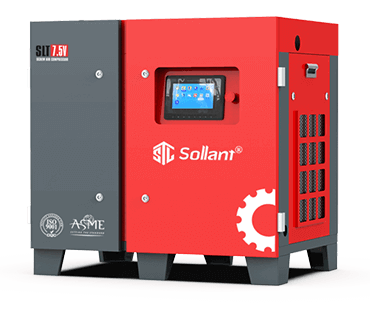
A 50 hp oil-injected machine is maybe $20,000. Oil-free same size, $35,000 to $40,000. This price gap is stable across the industry, 1.5 to 2 times, roughly the same ratio across brands including ELGi.

Oil-Injected
$20K
VS
Oil-Free
$35–40K

Where the extra cost comes from.

Oil-injected machines spray oil into the compression chamber. That oil does several things at once. There are gaps between the rotors and the housing, oil fills in and seals them. Compression generates heat, oil carries the heat away. When the rotors mesh, oil forms a lubricating film between them. After compression, the oil-air mixture enters a separator, oil gets caught and recirculated, air keeps going downstream.

Oil-free machines take the oil away. All of those functions have to be done some other way. Water injected designs replace oil with water for sealing and cooling.

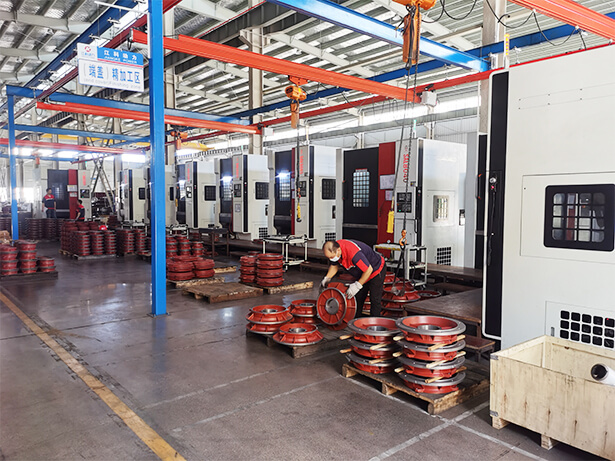
No oil helping with sealing, only option is machining precision, brute force. Clearance between rotors and housing has to be controlled very tight, a few microns. Raises the bar on machine tools, cutting tools, measuring equipment. Inspection gets more complex too. Every single unit has to be checked, clearances confirmed within tolerance.

Rotor materials and surface treatment, another chunk of cost. Oil-injected rotors are always bathed in an oil film, metal surfaces never directly touch. Oil-free rotors don't have that protection. Need coating, PTFE or ceramic type. Coating process itself isn't cheap, then you still have to test adhesion and uniformity. Some manufacturers also upgrade the base material, pick alloys with better wear resistance.

Precision rotor machining
Rotor Machining
Surface coating process
Surface Coating

Cooling system has to be bigger. Oil-injected machines, a big portion of the heat gets absorbed and carried by the oil. Oil absorbs heat in the compression chamber, dumps it at the oil cooler, circulates back. Oil-free machines don't have this heat path. All relying on intercoolers and aftercoolers. These heat exchangers need bigger surface area, fan power has to go up with it.

Bearing specs are different too. Oil-injected machine bearings run at milder temperatures because the circulating oil cools the bearing area along the way. Oil-free machine bearings face higher temperatures. Same load, bearing selection has to go up one grade, maybe two.

All these factors stacked together, that's the bulk of the price difference.

Oil-free has downstream contamination paths past the compression chamber.

Oil-free machines command a premium. Technical reasons covered above. There are also factors not purely technical.

Audits are one. Pharma, food, electronics, quality system audits check compressed air. Auditor sees an oil-free machine, the compressed air item basically passes right there. Few routine questions, look at maintenance records, nothing to dig into.

See an oil-injected machine, different story. What's the post-treatment setup. How often do filters get changed. Have they been changed on time. What shape is the oil separator in. Is there periodic testing of output oil content. Every point is a potential finding. Audit drags on. Chance of getting a corrective action goes up.

Auditing sometimes isn't purely a technical thing. Two systems both meeting spec. Facing the oil-injected one, auditor has more to verify, psychologically more on guard. Oil-free gives the auditor a simple call: no oil in the compression chamber, source is clean.

Quality problem happens, responsibility is different too. Behind an oil-injected machine is a string of stuff: oil separator, three-stage filtration, pipe connections. Any link could be the contamination source. Something actually goes wrong, gotta figure out if it was the separator, the filter, or the installation. Figure it out and there's still finger-pointing. Equipment vendor says it's a maintenance issue. Maintenance says it's the equipment.

Oil-free machine, compression chamber produces no oil. Contamination can only come from somewhere else. Intake air, piping, receiver tank. Investigation scope is smaller, responsibility easier to pin down.

Oil separator equipment
Oil Separator System
Filtration system
Multi-Stage Filtration

Day-to-day management, oil-free machines are less hassle. Post-treatment on an oil-injected setup needs someone watching. Filter elements have replacement cycles. Cycle comes, change them. Sometimes cycle hasn't come but the pressure differential is already high, change them early. Activated carbon has a saturation issue. Change too early, waste of money. Change too late, stops working. Someone has to record, someone has to judge, someone has to do it.

Oil-free machines cut that whole burden. Factories short on staff or loose on management, that's a real benefit.

The gap between $35,000 to $40,000 and $20,000, what it buys: precision-machined rotors, wear-resistant coatings, beefed-up cooling, higher-grade bearings. Also buys: less hassle at audits, less finger-pointing when things go wrong, one less thing to worry about daily.

How much that second part is worth, every buyer's math is different.

Footer Component - SOLLANT
滚动至顶部